Senate Rejects Democratic Effort to Limit Trump's Iran War Powers
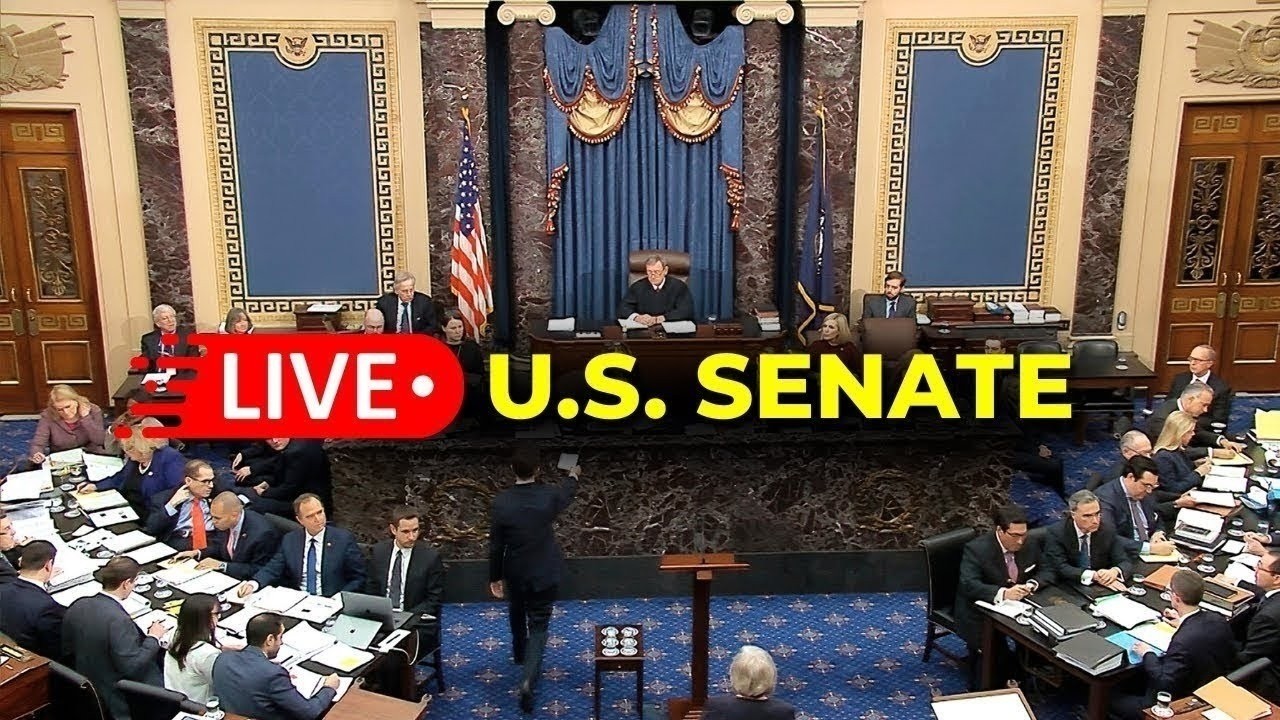
The **US Senate** has rejected a Democratic effort to rein in **President Trump**'s war powers in relation to **Iran**. The move comes as some **Republicans** e
Summary
The **US Senate** has rejected a Democratic effort to rein in **President Trump**'s war powers in relation to **Iran**. The move comes as some **Republicans** express concerns that Trump's comments on Iran could hurt the party's **midterm election** chances. The development is part of a broader discussion on the balance of power between the **executive** and **legislative branches** in matters of foreign policy and national security. This issue is closely tied to the [[war-powers-act|War Powers Act]] and the [[us-constitution|US Constitution]]. The situation also reflects the complex geopolitical landscape involving **Iran**, with the US having significant interests in the region, including the protection of shipping lanes like the **Strait of Hormuz**. For more context, see the [[iran-us-relations|history of Iran-US relations]].
Key Takeaways
- The US Senate rejected a Democratic effort to limit President Trump's war powers regarding Iran.
- The decision reflects deep divisions within the US over the use of military force and the role of Congress.
- The move has significant implications for US foreign policy, particularly in the Middle East.
- It underscores the challenges faced by the Trump administration in navigating complex international relations.
- The situation highlights the importance of understanding the US political system and the principles of international relations.
Balanced Perspective
The Senate's decision is a reflection of the **complex interplay** between political, strategic, and legal considerations in US foreign policy. While it may indicate support for the President's handling of Iran, it also **highlights the ongoing debate** about the appropriate balance between executive authority and congressional oversight in matters of war and national security. This balance is crucial for ensuring that the US acts both effectively and within the bounds of its constitutional framework, as outlined in the [[us-constitution|US Constitution]]. The role of **Congress** in this process is pivotal, as seen in the [[war-powers-act|War Powers Act]].
Optimistic View
The rejection of the Democratic effort could be seen as a **strong statement of support** for the President's authority in handling national security matters, particularly in regions as volatile as the Middle East. This stance might **bolster the US's negotiating position** with Iran, potentially leading to more favorable outcomes in future diplomatic engagements. Furthermore, it reflects a **trust in the executive branch** to make timely and decisive decisions in the face of emerging threats, which is crucial in the rapidly changing global security landscape. For insight into the strategic implications, consider the views of [[henry-kissinger|Henry Kissinger]] on diplomatic negotiations.
Critical View
The rejection of the effort to limit Trump's war powers with Iran could be viewed as a **dangerous escalation** of executive authority, potentially leading to **unilateral military actions** without adequate congressional approval or oversight. This could not only **strain relations with allies** but also **increase the risk of conflict**, given the volatile nature of the region and the historical tensions between the US and Iran. Critics argue that such an expansion of executive power undermines the system of checks and balances, as discussed by [[noam-chomsky|Noam Chomsky]] in the context of US foreign policy.
Source
Originally reported by NBC News